
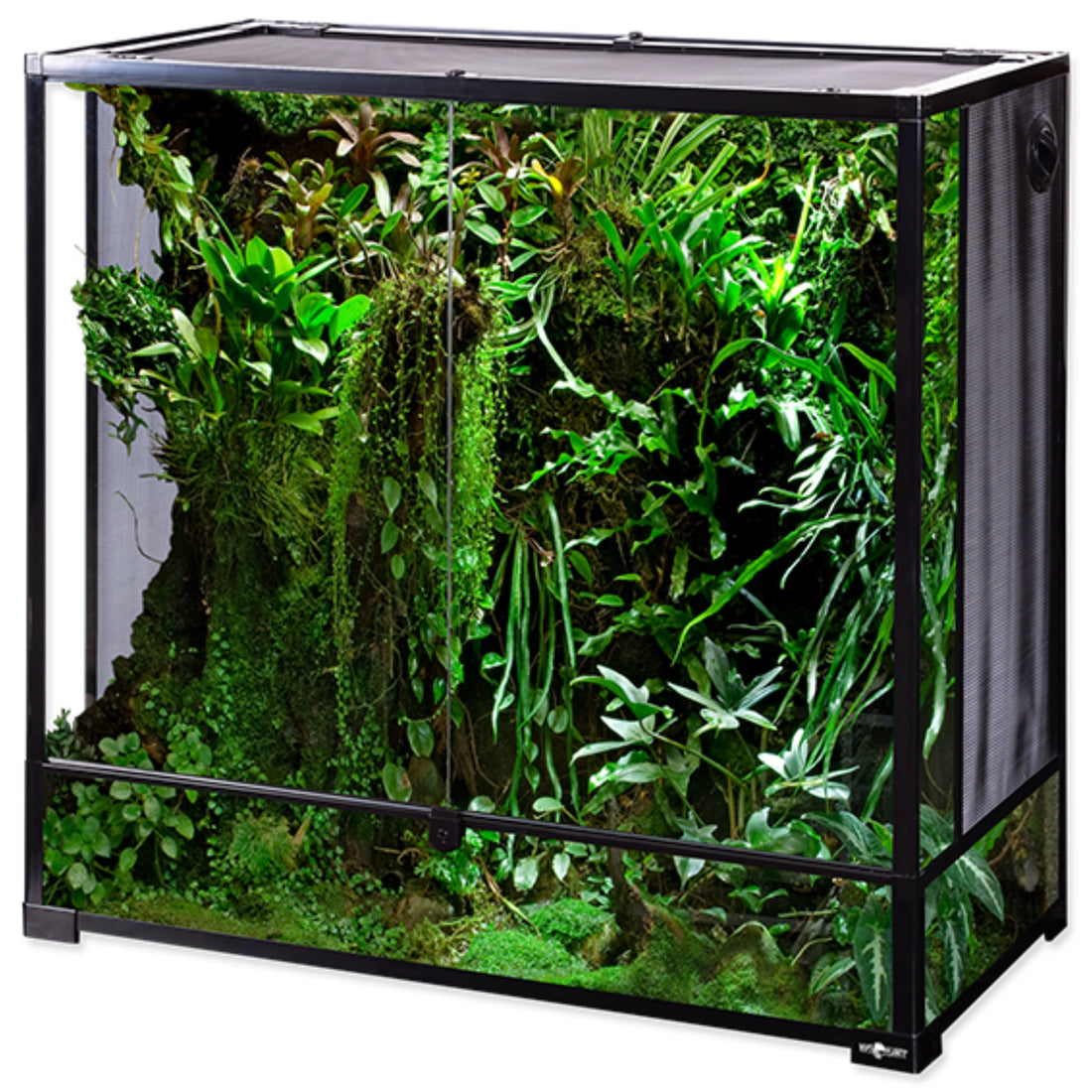
🌱 Planted Terrarium Lighting: An Easy Guide to Getting Started
Valerio Chiaradonna Have you just set up a planted terrarium but don't know how to manage the lighting? Don't worry, you've come to the right place. In this article, I'll explain everything you need to know about planted terrarium lighting , even if you're a complete beginner.
Understanding how much light you need, what type to use, and how to position it is essential to creating a healthy, long-lasting, and beautiful ecosystem.
💡 Why is light essential in a terrarium?
Light is the main source of energy for plants. Without adequate lighting, even the most resilient plant will eventually suffer. In nature, sunlight regulates the life cycle of plants. In a terrarium, we must recreate that cycle with artificial terrarium lighting designed to stimulate photosynthesis and maintain the right balance of light, humidity, and temperature.
What kind of plants do you have in your terrarium?
Not all plants require the same amount of light. Tropical plants like fittonia, pilea, and ferns prefer bright, indirect light. Moss, on the other hand, adapts well to soft, diffused light. Mini orchids appreciate constant light, but never too bright. If you've chosen succulents or cacti, these require plenty of direct light and are only suitable for open terrariums.
Avoiding combining plants with opposing needs is the first rule for a balanced terrarium.
🔦 Which artificial light should I choose?
The choice of light depends on the size of the terrarium, the type of plants, and your budget. Full-spectrum LEDs are currently the best solution. Low power consumption, a long lifespan, low heat output, and a light spectrum similar to sunlight make them ideal for any terrarium.
Compact fluorescent lamps, known as CFLs, are an affordable and accessible alternative for beginners. They work well in small terrariums, although their output is lower than LEDs.
For larger terrariums or if you want to grow tropical plants and mosses, you can use T5 or T8 fluorescent tubes. They distribute light well across the entire surface and help maintain uniform growth.
⏰ How many hours of light do you need?
Photoperiod, or the duration of daily light, is crucial. In a terrarium, the ideal duration of artificial lighting is between 10 and 12 hours a day. To avoid mistakes, I recommend using an automatic timer. This way, the plants receive constant and natural light, even if you're not always home.
🪟 Correct positioning of the light
If you're also taking advantage of natural light, place the terrarium near an east- or west-facing window. Avoid direct sunlight during the middle of the day, as it can overheat the interior, creating excessive condensation or even burning the leaves.
For artificial lights, the ideal distance between the lamp and the plants is about 15-30 cm. Never place the lamp inside the terrarium: in addition to being dangerous, it alters the humidity and internal temperature.
🧪 How do you know if the lighting is right?
Observing your plants is the best way to determine if you're doing the right thing. If the leaves become pale, thin, or stretched toward the light source, it means the light is insufficient. Conversely, if you notice dry edges, yellow spots, or a burned appearance, the light may be too bright or too close. Excessive condensation on the walls can also be a sign of overheating or poor ventilation.
🛠️ Practical tips to get you started on the right foot
Use LED lamps with a color temperature of 6500K: it simulates daylight and stimulates photosynthesis.
Choose lamps that are height-adjustable or have an adjustable stand.
Use a timer to automate your light cycle and maintain regularity.
Avoid decorative lights like RGB LEDs: they're nice to look at but useless (and harmful) to plants.
🤝 Need help choosing the right light?
If you'd like personalized advice on which light to choose, how to set the timer, or how to match plants to your terrarium type, please contact me.
Terrarium lighting for plants isn't a technical detail, but a key element in creating a balanced, healthy, and long-lasting ecosystem. Choosing the right lamp, understanding your plants' needs, and respecting the photoperiod will guarantee amazing results, even without being an expert. If you love nature and want to bring it indoors, start with the light: that's where it all begins.