
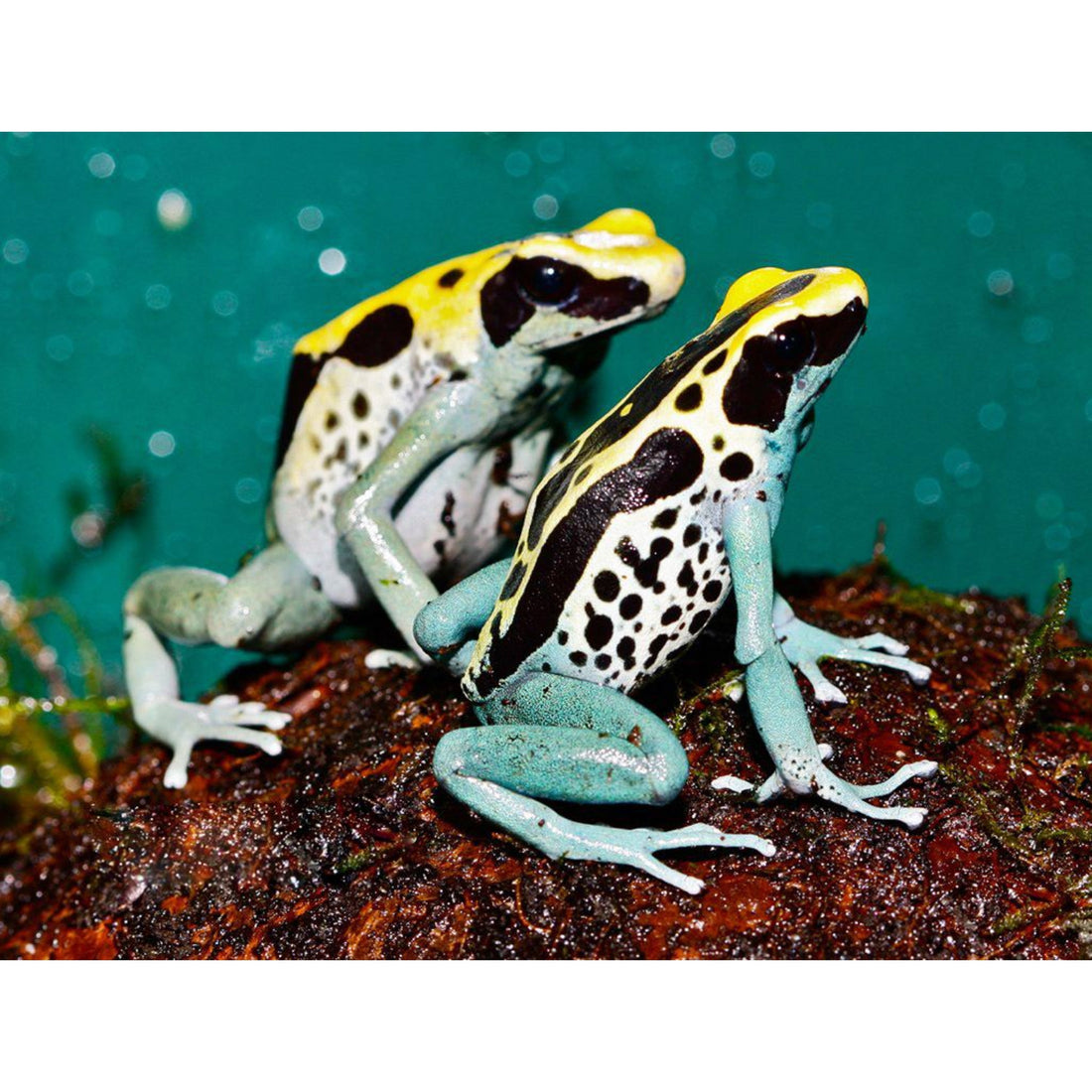
Dendrobates: A Complete Guide to Tropical Poison Dart Frogs
Valerio Chiaradonna Common name: Poison dart frog / Poison dart frog
Scientific name: Genus Dendrobates (e.g. Dendrobates tinctorius , Dendrobates auratus , Dendrobates leucomelas )
Family: Dendrobatidae
When we think of the rainforest, images of brilliant colors, incessant sounds, and astonishing creatures come to mind. Among these marvelous inhabitants are the Dendrobates , better known as poison dart frogs or poison dart frogs . Despite their fearsome name, in captivity these little tropical jewels lose their toxicity, becoming spectacular and safe animals to raise. Let's find out together what Dendrobates are and how to best care for them!
Who are Dendrobates?
Dendrobates belong to the Dendrobatidae family and include several species known for their vibrant colors: from electric blue to bright yellow, to psychedelic combinations of green and black. In the wild, these frogs are primarily found in the rainforests of Central and South America , where the warm, humid climate provides the ideal environment for them to live.
Despite their small size — between 2.5 and 5 centimetres — Dendrobates are true forces of nature: active during the day, territorial and endowed with incredible agility in jumping.
The Ideal Terrarium: How to Recreate a Rainforest Corner
To host these wonders, it is essential to create a well-equipped tropical terrarium :
Minimum dimensions: 30x30x45 cm for a pair
Temperature: 24–28 °C during the day, 20–22 °C at night
Humidity: 80–100%, maintained with manual misting or automatic systems
Lighting: 12 hours of light per day; the use of UVB lamps (5%) helps prevent calcium deficiencies
The substrate should be layered, with drainage (such as expanded clay) at the base, followed by a barrier and a layer of tropical soil. Live plants such as bromeliads, natural moss, and bark should be included to provide shelter and environmental enrichment.
What do Dendrobates eat?
In the wild, Dendrobates feed on tiny insects, some of which contain toxic alkaloids responsible for their legendary venom. In captivity, where they are fed "safe" insects, they completely lose their toxicity .
The ideal diet includes:
Fruit flies ( Drosophila melanogaster or hydei )
Microcrickets
Springtails
It is important to regularly supplement food with calcium and vitamin D3 to ensure healthy development, in addition to a weekly multivitamin.
Behavior and reproduction
Dendrobates are diurnal animals and can exhibit territorial behavior, especially males. For this reason, it's essential to monitor interactions and avoid overcrowding in the terrarium.
During the breeding season, frogs lay their eggs on moist surfaces. Once hatched, the parents may even carry the tadpoles to plants or small pools of water. Observing this natural behavior in captivity is one of the most fascinating aspects of raising these frogs.
How long do Dendrobates live?
With proper care, Dendrobates can live up to 10 years in captivity. The key is to maintain a consistent tropical environment and provide a varied and balanced diet.
Dendrobates are incredible animals that require dedication, but in return they offer a daily spectacle of astonishing colors, sounds, and natural behaviors. If you're looking for a different kind of breeding project that brings you closer to the mysteries of the rainforest, these little frogs might be perfect for you!
Have you already raised Dendrobates or are you thinking about doing so? Tell us in the comments! 🐸🌿
