
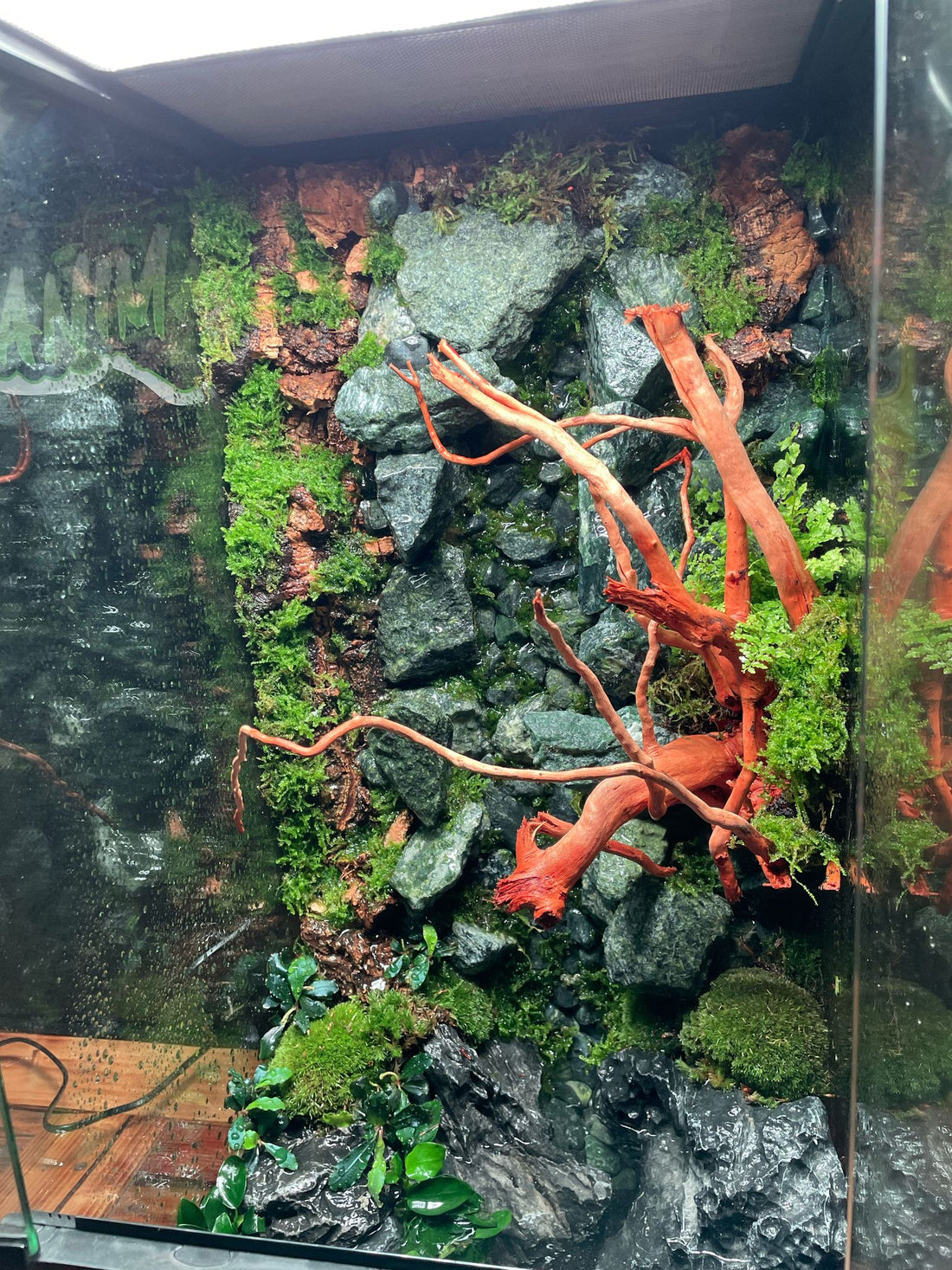
Create Your Own Natural Ecosystem: A DIY Waterfall Terrarium Guide
Valerio ChiaradonnaIn recent years, the passion for aquariums and terrariums has grown exponentially, leading many enthusiasts to transform their spaces into mini natural ecosystems. Animal Instinct, with experience in the field since 2003, is here to inspire and guide you in creating your own waterfall terrarium, a true "underwater garden" that combines the beauty of nature with interior design.
Why Choose a Waterfall Terrarium?
Creating a terrarium with a waterfall isn't just an innovative decorative element; it's also a habitat that mimics the natural balance between water and vegetation. The advantages of this type of setup include:
- Relaxing and harmonious effect: The sound of flowing water and the sight of lush plants help reduce stress and improve mood.
- Sustainable micro-ecosystem: A well-made terrarium promotes the cycle of life, thanks to the presence of plants that purify the air and a drainage system that keeps the water clean.
- Design Versatility: Suitable for both home and office spaces, the waterfall terrarium becomes a unique and personalized piece that speaks to your passion for nature.
Recommended Materials and Products
To begin your project, we recommend choosing quality products from Animal Instinct, the result of years of experience in the aquarium industry. Here's a list of the materials you'll need:
- Transparent container: A glass aquarium or a suitable terrarium, which guarantees visibility and safety.
- Drainage system: Pebbles or gravel and a layer of activated carbon to keep the water always clean.
- Specific soil: A mix designed for terrariums, ideal for supporting the growth of tropical plants and mosses.
- Waterfall structure: Moldable materials (such as spray foam or Styrofoam) and non-toxic silicone to create the wall from which the water will flow.
- Submersible Pump: A 12V pump, perfect for ensuring a constant and gentle flow of water.
- Tubing and decorative accessories: Silicone or PVC tubing, natural stones, driftwood, moss, and other items that will make your terrarium unique.
Visit the Animal Instinct Products section to discover the best solutions for your project.
Step-by-Step Guide to Making
1. Planning and Design
Before getting your hands on the materials, take a moment to imagine the layout of your terrarium. Draw a sketch that defines:
- Water area: Where the waterfall will be installed.
- Terrestrial Zone: The area where plants will grow.
- Pump placement: Make sure its location is not visible and that the water flow integrates seamlessly into the design.
2. Preparation of the Fund
- Drainage system: Start by spreading a layer of pebbles or gravel on the bottom of the container. Add a layer of activated carbon to aid water filtration.
- Soil: Over the drainage, place the specific terrarium soil, taking care to create a stable support for the roots of your plants.
3. Construction of the Waterfall
- Create the structure: Use spray foam or a moldable material to create the wall from which the water will flow. Shape the surface to achieve a natural, dynamic effect.
- Attachment: Use non-toxic silicone to attach the frame to the back or side of the container. Be sure to seal the gaps well to prevent leaks.
4. Installing the Pump and Pipe
- Position the pump: Place the submersible pump in the water area, making it blend in with the pebbles.
- Connect the hose: Attach the hose to the pump and run it along the waterfall frame, so that the water is distributed along the wall. Turn on the pump and check that the flow is constant and gentle.
5. Setup and Decoration
- Planting: Place the plants in the soil, choosing species suited to a humid environment such as ferns, mosses and tropical plants.
- Decorative elements: Add stones, driftwood, and moss to hide any technical components and complement the natural landscape.
- Final checks: Fill the container with distilled or reverse osmosis water, testing the system to ensure there are no leaks and that the water flow is smooth.
Tips for Effective Maintenance
A well-balanced ecosystem requires constant care. Here are some tips to keep your waterfall terrarium in tip-top condition:
- Periodic Cleaning: Check and clean the pump and tubing to avoid blockages.
- Humidity Control: Monitor water levels regularly and top up as needed to ensure plants thrive.
- Pruning and plant care: Remove dead leaves and prune plants to prevent them from becoming too invasive.
- Check the drainage system: Make sure the drainage is working properly, avoiding stagnation that could damage the ecosystem.
Creating a waterfall terrarium is an exciting project that transforms your home into a little corner of nature. Thanks to Animal Instinct's step-by-step guide and high-quality products, you can create a personalized ecosystem where the harmony of water, plants, and design takes center stage.
Don't miss the opportunity to transform your space: visit Animal Instinct and discover our wide range of products for freshwater and marine aquariums. Whether you're a beginner or an expert, our team is always ready to support you on your journey to a greener and more relaxing world!
We hope this guide has inspired you and that your new waterfall terrarium will soon become the centerpiece of your space. Happy creating and... let nature inspire you!
