Frog Terrarium Care Guide
Valerio ChiaradonnaDo you want to create a green corner at home with the frogs, but you fear of not having Experience? Learn how to care for a terrarium. bioactive with frogs: with few precautions, you will keep healthy plants, a hygienic environment and animals in full well-being. This guide explains to you everything in a way practical and clear.
What is a frog terrarium and why should you choose one?
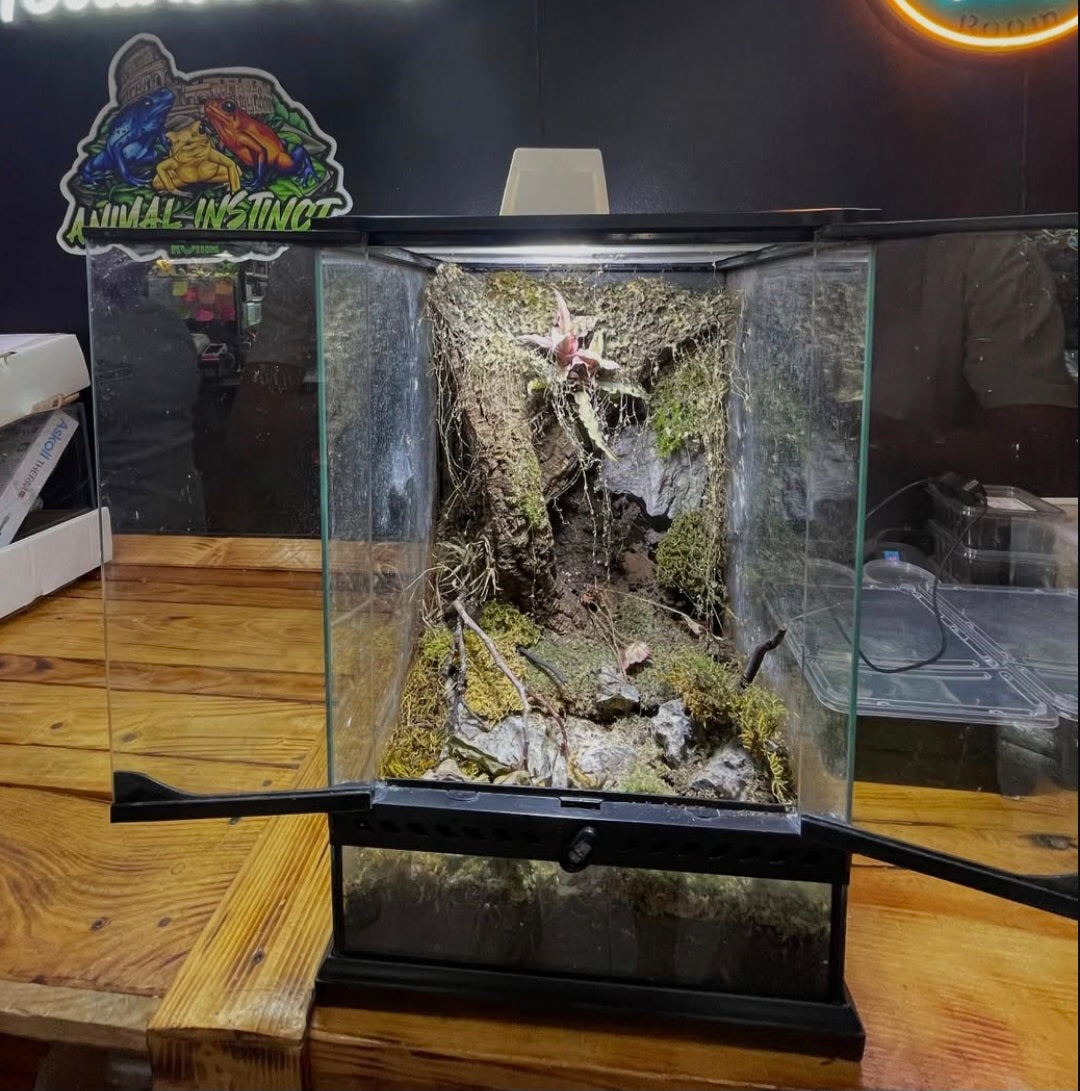
A terrarium for frogs are a closed ecosystem in a glass container, designed for host frogs but also plants tropical plants, mosses, and microfauna such as springtails and isopods. This habitat allows you to reconstruct the conditions natural of the frogs, offering humidity and the protection of they need. Choose the bioactive terrarium means rely on a simple system to maintain, also useful for those who leave from scratch, because the microfauna helps keep the clean substrate.
Lighting, positioning and environment
For the health of frogs and plants, it is not enough natural light only: it is essential to install a light above the terrarium artificial to full spectrum, such as terrarium-specific LEDs, positioned at about 15-30 cm from the surface. This lighting must be set on a timer. from 10-12 hours per day, simulating the natural diurnal cycle and ensuring a growth uniform of the plants and animal welfare.
Avoid direct exposure to the sun and the changes in temperature, which can overheat the terrarium and create excessive condensation.
Substrate, springtails and isopods
Prepare the base using fiber of coconut, sphagnum and a generous layer of dry leaves, which simulate the humid undergrowth. Add the springtails and tropical isopods: they are small harmless organisms that feed on organic waste, feces and mold, drastically reducing the risk of bad smells and maintaining the substrate cleaned over time.
Daily routine
- Remove manually the most visible excrement, food remains and rotten leaves that the "detritivores" do not they still have consumed.
- Check and adjust the level of humidity between 60% and 80%: use a spray bottle, avoiding stagnation.
- Change the water in the internal bowls at least once a day. twice a week to prevent proliferations bacterial.
Weekly maintenance
- Clean the terrarium glass with a cloth soft, without detergents.
- Eliminates persistent mold and, if necessary, replace part of the substrate.
- Pruning minimum of the plants to avoid that they become too thick and get in the way ventilation.
- Keep always a stable microclimate, without drafts of air and with the right lighting.
Cleaning and problem prevention
- It airs every now and then the terrarium, opening the lid for a few minutes, to reduce the formation of mold and ensure an exchange of air.
- Reduce the water or intervene with the microfauna if they appear bad smells or white spots.
- If midges appear, remove leaves promptly decaying and check that the level of humidity is not excessive.
- Remove immediately damaged plants or rotten parts to prevent that the problems are spread to the animals or to other species vegetables.
Microfauna: an ally of cleanliness
Springtails and isopods work constantly reducing the need for manual interventions: they eat feces, food remains and debris, making maintenance very difficult simpler and the environment always hygienic. However, the your attention stay fundamental to detect any problems.
| Problem | Symptoms | Solution |
|---|---|---|
| Dry soil | Dry leaves and moss | Spray with water |
| Yellow leaves | Too much or too little water | Regulate irrigation |
| Mold | White spots, strange smell | Air out and clean |
| Midges | Flying insects | Remove rotten leaves |
| Soft plant | Yielding stem, rot | Cut and remove rotten parts |
If you are unsure which product is right for you, Write us on WhatsApp or stop by the store : our team is available to give you the best advice.
📍 Where to find us
Animal Instinct Rome
For more details and to purchase products:
Via di Monte Verde, 2, 00152
Telephone: 06 87691 933
Mobile: 338 838 1624
Discover all our available items on our website www.animal-instinct.it