A Complete Guide to Raising the Red-Eyed Frog (Agalychnis callidryas)
Valerio ChiaradonnaIf you're fascinated by the world of amphibians and are thinking about keeping an Agalychnis callidryas , also known as the red-eyed tree frog , you've come to the right place! This beautiful tree frog, native to the rainforests of Central America, is one of the most iconic and popular species among terrarists. However, to keep it healthy, it's essential to create a suitable habitat and provide the right care.
In this guide, we'll cover everything you need to know about raising red-eyed frogs: from terrariums to feeding, including temperature and humidity management.
1. Characteristics of the Red-Eyed Frog
The Agalychnis callidryas is famous for its spectacular appearance:
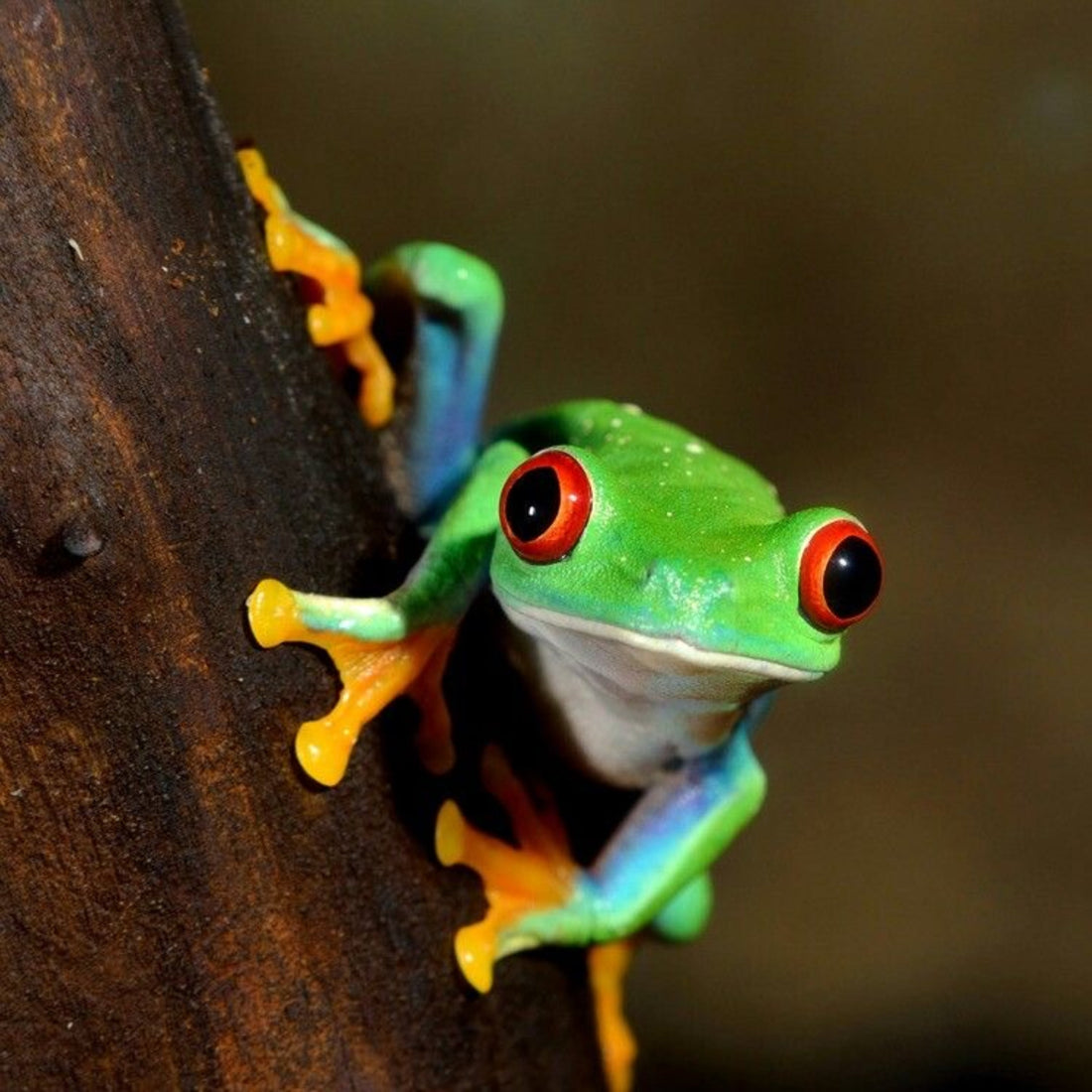
- Bright red eyes that help it disorient predators.
- Bright green body with blue and yellow shades on the sides.
- Orange legs and long fingers with suction cups for perfect adhesion to branches and leaves.
It is a nocturnal and arboreal frog, which means that during the day it remains hidden among the leaves and becomes active only after sunset.
2. The Perfect Terrarium for the Agalychnis callidryas
Creating a habitat that mimics the red-eyed frog's natural environment is essential for its health. Here are the key parameters:
Terrarium Size and Type
- Recommended minimum : 45x45x60 cm for a couple.
- Material : A glass terrarium with good ventilation.
- Setup : lots of branches, large leaves (like those of artificial or real plants like Photos), and shelters to hide in during the day.
Temperature and Humidity
- Daytime temperature : between 24°C and 28°C .
- Night temperature : between 20°C and 22°C .
- Humidity : between 70% and 80% , maintained with regular misting.
- Lighting : 12-hour day/night cycle with low-intensity UVB light to promote vitamin D3 synthesis.
Substrate
Use coconut fiber, sphagnum moss, or unfertilized potting soil to maintain humidity and make cleaning easier.
3. Diet: What Does the Red-Eyed Frog Eat?
This frog is an insectivore and feeds mainly on:
- Crickets (the basis of the diet).
- Cockroaches doubtful .
- Mealworms (only occasionally, because they are too fatty).
- Fruit flies and other small insects .
Supplementation
To avoid nutritional deficiencies, sprinkle your food with:
- Calcium with vitamin D3 (2-3 times a week).
- Multivitamin (1 time per week).
4. Behavior and Management
- Nocturnal : Will be more active at night.
- She does not like to be handled : contact with human skin can stress her and damage her delicate skin.
- Sociality : They can be kept in pairs or small groups, but require adequate space.
5. Captive Breeding
If you want to breed your Agalychnis callidryas, you will have to simulate the cycle of the seasons:
- Dry season : reduce spraying and lower the temperature slightly.
- Rainy season : Increase humidity and temperature, misting more often.
- Egg laying : The female lays her eggs on leaves above the water; after a few days, the tadpoles will hatch and fall into the water.
6. Common Health Problems
Dehydration
Signs: Wrinkled skin, inactivity. ➡ Solution : Increase humidity and spray more frequently.
Hypoparathyroidism (calcium deficiency)
Signs: fragile bones, difficulty moving. ➡ Solution : supplement regularly with calcium and vitamin D3.
Fungal or bacterial infections
Signs: Skin lesions, redness. ➡ Solution : Isolate the frog and consult an exotics veterinarian.
7. Conclusions: Is This Frog Right for You?
The Agalychnis callidryas is a spectacular and fascinating frog, but it's not a pet that should be handled. If you're willing to create a humid environment and carefully manage its diet, this species can be a perfect choice for your terrarium.
If you need more advice or want to share your experience, leave a comment below!
2 comments
Vorrei allevare queste raganelle, ho un terrario 45×45×45 della Exo terra.
Le dimensioni sono ok? Dove posso acquistare gli esemplari? Qual’é il prezzo? Grazie