
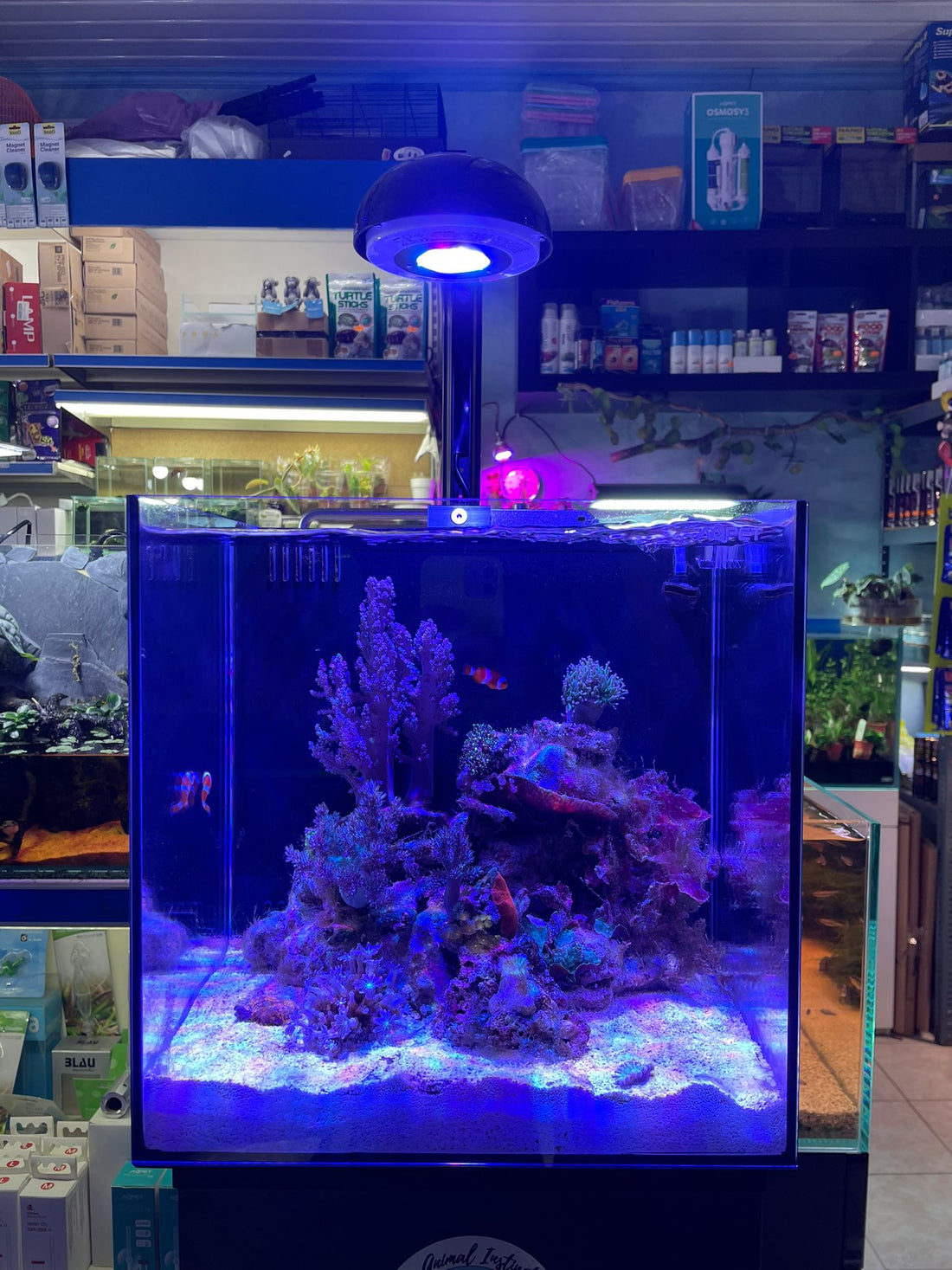
A Guide to Creating a Mini Reef: Tips and Frequently Asked Questions
Valerio ChiaradonnaMini reefs, also known as nano reefs, are a popular option for marine aquarium enthusiasts who want an ecosystem rich in marine life but with a more compact size. These small gems of biodiversity require special attention and care to ensure ecosystem stability, but with the right preparation, they can be extremely rewarding.
What Do You Need to Start a Mini Reef?
To get started, you'll need a few essential components:
- Aquarium : A compact aquarium, such as the Qube Kit 25 or the Reef Box 40 , is perfect for mini reefs. Other options include the Kubic 50 , the Aqua Kit Rear 60, and the Kubic Rear 30.
- Adequate Lighting : Lighting is essential for coral growth. LED lights are an excellent choice for providing bright light without excessive heat.
- Live Rock and Live Sand : These are key elements in creating a natural marine environment that contributes to the nitrogen cycle.
- Circulation Pump and Filter : Essential for maintaining a constant water flow and cleaning the water of waste.
For an even more complete experience, consider kits like the Kubic 30 Rear Kit , which includes an integrated filtration system.
How Long Does It Take to Cycle a Mini Reef?
One of the most common mistakes is introducing new inhabitants to the mini reef too early. The nitrogen cycle is a process that can take several weeks. This time is necessary for ammonia, nitrite, and nitrate levels to stabilize, reducing risks to corals and fish. During this time, it's helpful to regularly monitor water parameters and perform small water changes weekly.
Which Species Are Suitable for a Mini Reef?
To maintain a stable balance, it's best to start with invertebrates like snails, crabs, and more robust corals. Some small fish like gobies and clownfish can be added later, but avoid overly large species like angelfish and moray eels, which are not suitable for nano reefs.
What are the main problems to avoid?
One of the most common problems is aquarium overheating, especially in summer or if placed near heat sources. Another common problem is the buildup of unwanted algae, which can be controlled by maintaining stable water chemistry and using a good filtration system. Products like the Aqua 60 Rear Kit are ideal for providing an integrated filtration system and ensuring water quality.
Maintenance and Care
Proper mini reef maintenance includes regular water changes and filter cleaning. It's essential to monitor salinity, pH, and water temperature to prevent future problems. Experts recommend changing 10-20% of the water every week to keep the system balanced.
In addition to the main tips, here are some other important aspects to consider for those who want to create and maintain a mini reef:
-
Species Compatibility : When adding new inhabitants to your mini reef, pay attention to the compatibility of fish, corals, and invertebrates. Some species can be territorial or aggressive, so it's essential to know which species can coexist peacefully. Also, avoid species that are too large or require a lot of swimming space.
-
The importance of patience : Creating a marine ecosystem requires patience. It's crucial not to overload the system by adding too many organisms too quickly. This could compromise the stability of the mini reef and lead to problems with water parameters.
-
Water parameters : In addition to the nitrogen cycle, it is essential to regularly monitor salinity, calcium, magnesium, and alkalinity, which are vital for coral growth and health. These parameters must be maintained within recommended limits to avoid stress or disease in reef inhabitants.
-
Using quality accessories : Equipment plays a crucial role in the long-term success of a mini reef. Investing in quality equipment, such as a good skimmer to remove organic waste and an adequate lighting system for corals, is essential. Products like the Kubic 30 Rear Kit provide efficient filtration to prevent debris buildup that can compromise the health of the aquarium.
Finally, consistency in maintenance and monitoring is the key to a successful mini reef.
With these tips, you can create and maintain a healthy and thriving mini reef. If you're looking for the right starter kit, I recommend exploring our products, like the Qube Kit 25 , for a practical and well-structured solution for your marine aquarium.