
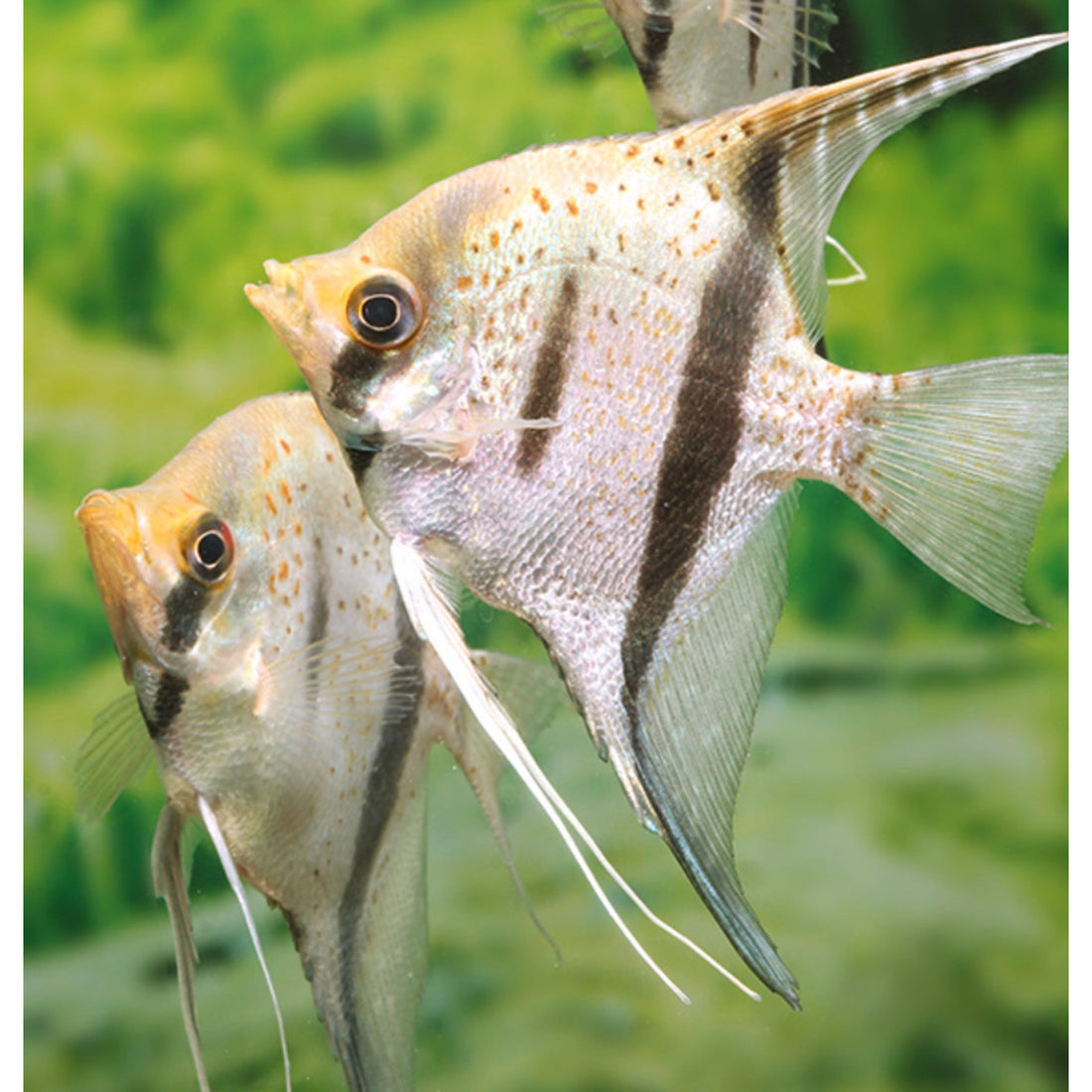
The Pterophyllum scalare: The Angelfish That Will Make Your Aquarium a Paradise!
Valerio ChiaradonnaAre you an aquarium enthusiast looking to add a touch of class to your aquatic ecosystem? Then let me introduce you to the Pterophyllum scalare , better known as the freshwater angelfish! This Amazonian cichlid is the king of elegance among tropical fish, and today I'll explain everything you need to know to keep it a success in your aquarium.
What is Pterophyllum scalare?
Imagine a fish with a regal bearing, long, sinuous fins, and the air of a true aquarium boss. This is the angelfish. Hailing directly from the Amazon rivers, with its slender fins and slender body, it looks like something out of a fantasy film!
Family : Cichlidae
Origin : Rivers of the Amazon River
Dimensions : Up to 15cm long and 25cm high (including fins!)
Life expectancy : 10-12 years (if treated like a VIP)
Colors : Classic wild-type with black bands, but there are albino, koi, marble, black, platinum and other varieties!
His Kingdom: How to Set Up the Perfect Aquarium
If you want a happy and majestic climber, you must create an environment worthy of its elegance.
Aquarium size : At least 150 litres for a pair, 200+ litres if you want more specimens
Water temperature : between 24 and 28°C (because it is a type that loves tropical climates)
pH : between 6.0 and 7.5 (he wants balance in life)
Hardness : 3-10 °dGH
Filtration : strong but with moderate flow, because the scalar hates too strong currents
Furnishings : tall plants (such as Vallisneria or Echinodorus), wood and roots for an Amazonian jungle effect
Important: Angelfish love to swim vertically, so don't overdo the decorations and leave plenty of room overhead!
What does he eat? The gourmet scalare menu
Our friend is an omnivore with refined tastes. In the wild, he feasts on insect larvae and small invertebrates, while in the aquarium you can treat him to:
Top-of-the-range granular or flake feed
Artemia, bloodworms and daphnia (live or frozen for a protein boost)
A varied and balanced diet will keep him healthy and with super bright colors.
Climbing and friends: who can live with him?
Angelfish are peaceful creatures, but they have a certain temperament. They can become territorial, especially in pairs or during breeding.
Compatible fish: ✅ Corydoras, rasboras, adult neon tetras, gouramis, discus
❌ Guppies (too small), shrimp (easy appetizer), aggressive or fin-nibbling fish (such as tiger barbs)
It is best to keep it in a group of at least 5-6 specimens to reduce any tension between housemates.
Reproduction: When Cupid strikes angelfish
Angelfish are monogamous fish, and once they find their soulmate, they stay together forever (romantic, right?). Here's how the magic happens:
1. Honeymoon climate
To encourage egg laying:
Keep the water between 27-28°C
Adjust the pH between 6.5-7.0
Offer super nutritious food (top protein!)
Prepare a smooth surface such as large leaves, stones, or aquarium glass.
2. Egg laying
The female lays her eggs in neat rows, and the male fertilizes them immediately afterward. 100-1,000 eggs can be born at once! 😲
3. Baby scalars on the way
The parents fan the eggs with their fins (model parents!)
After 48 hours , the eggs hatch
The fry remain attached to the substrate for 4-5 days, feeding on the yolk sac.
Once free swimming, they should be fed with artemia nauplii
Be careful: if the parents get too stressed, they might eat the eggs! If you want to ensure the chicks survive, you can move them to a separate tank.
Why have a angelfish in your aquarium?
The Pterophyllum scalare is the perfect fish for anyone looking for a captivating aquarium, full of style and personality. Not only is it beautiful, but it's also relatively easy to care for. With proper care, it can live up to 12 years and become the true king of your tank!
If you're looking to add a scalar to your aquarium, stop by Animal Instinct in Rome! We'll help you choose the perfect specimen and give you all the tips to ensure it thrives. We look forward to seeing you! 😉
