Poison Dart Frogs: Little Tropical Jewels for Your Terrarium
Valerio ChiaradonnaPoison dart frogs are among the most fascinating and colorful animals you can keep in your terrarium. Native to the rainforests of Central and South America, these tiny creatures capture attention with their bright colors and unique behavior. But what makes these frogs so special? In this article, you'll learn everything you need to know about them and why they could be the perfect choice for those who love the world of exotic animals.
What Are Poison Dart Frogs?
Poison dart frogs, belonging to the Dendrobatidae family, owe their name to the tradition of some indigenous tribes who used their venom for arrowheads. Don't be scared: captive-bred specimens are not poisonous, as their toxicity depends on their diet in the wild. Beyond their fame, these frogs are distinguished by their incredible color combinations, from deep blue to bright yellow, making them true living works of art.
Why Choose a Poison Dart Frog?
Unlike other pets, poison dart frogs require less direct interaction, but their liveliness and beauty provide a constant spectacle. Here are some reasons why they're ideal:
- Unique Aesthetics: Each species has distinctive colors and patterns.
- Fascinating Behavior: They are diurnal, so you can observe them during the day.
- Ease of management: With the right terrarium and a well-organized routine, they are relatively easy animals to care for.
- A piece of the forest in your home: A well-decorated tropical terrarium with live plants and decorations is a fascinating micro-world to observe.
How to Care for Poison Dart Frogs
If you've decided to welcome these wonders into your home, it's important to know how to create the ideal environment.
1. Setting up the terrarium
Poison dart frogs need a tropical terrarium with:
- Humidity: Between 70% and 90%, maintained with automatic misting devices or daily manual spraying.
- Temperature: Between 22°C and 27°C, with a slight decrease at night.
- Substrate and plants: Use a well-draining substrate and plant it with tropical plants, such as ferns and bromeliads, which provide hiding places and water.
- Lighting: RGB light to enhance the color of plants and animals, and for the flourishing growth of plants and mosses. Skylight Mid-30 intense / Skylight Mid-50 intense
2. Power supply
Their diet consists of small live insects, such as fruit flies and springtails. These insects are readily available, and with a little practice, you can even raise them at home.
3. Maintenance
A terrarium requires regular maintenance, such as cleaning surfaces, monitoring environmental parameters, and removing food debris. With minimal effort, your terrarium will be a healthy, self-sustaining ecosystem.
Which Species to Choose?
There are many species of poison dart frogs, each with unique characteristics. Here are some of the most popular:
-
Phyllobates terribilis : The Phyllobates terribilis, also known as the Golden Frog, is the most poisonous frog in the world; a single dart poisoned with its serum can kill up to 10 humans. This frog has a completely yellow color with some black spots on its legs. This amphibian lives exclusively in Colombia.

-
Dendrobates Tinctorius Azureus: This Dendrobates, among the most famous in the world, is found in Guyana, Brazil, French Guiana, and Suriname. Its coloration includes all shades of blue, from azure to midnight blue, all dotted with black. These frogs reach 5 cm in length.

- Epipedobates Anthonyi : The poison dart frog Elidedobates Anthonyi is a species of poison dart frog in the Dendrobatidae family. This species is endemic to Ecuador and Peru. It has a burgundy-red body with aquamarine stripes.

- Dendrobates Leucomelas : The Dendrobates Leucomelas is the most recommended frog for beginners approaching the world of dart frogs. The Leucomelas grows from 3 to 4.5 cm. Its coloration is a beautiful yellow, often tending towards orange, with black bands and spots. The Leucomelas is found in the wild from the Orinoco basin in Venezuela to the Essequibo River and the Amazon basin.

- Dendrobates truncatus : The yellow-striped poison dart frog is a species of frog in the Dendrobatidae family. It is endemic to Colombia. This small poison dart frog is completely black with yellow bands.

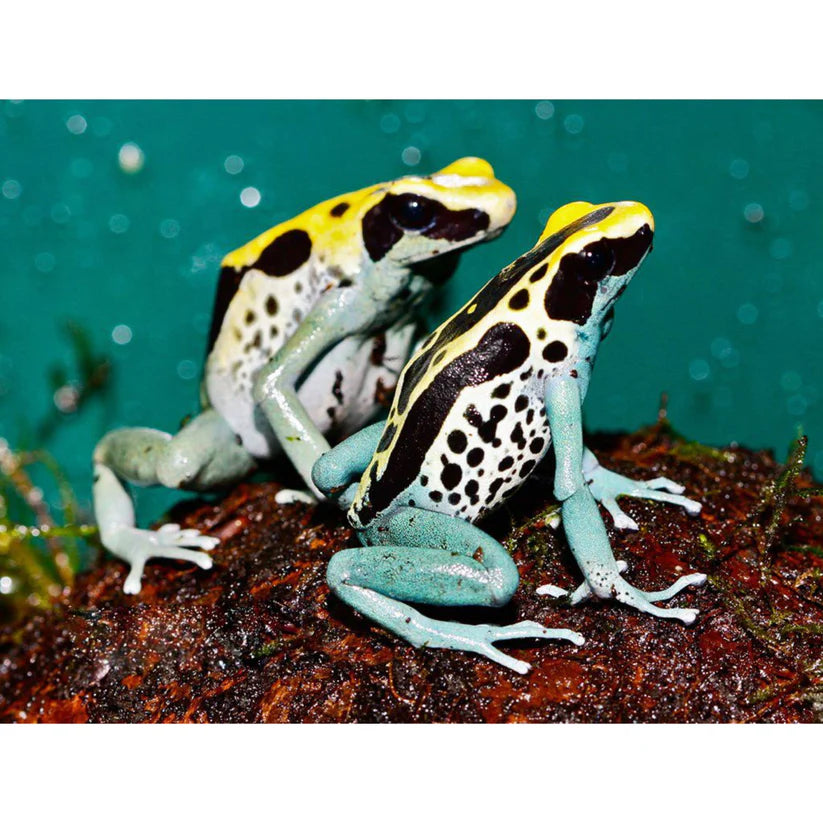
- Dendrobates tinctorius “patricia” : The Dendrobates tinctorius “Patricia” originates from Suriname and Brazil. This poison dart frog's coloration consists of various shades of blue and light blue on its legs and a yellow back with black spots.

Each species has similar needs, but if you're unsure about which frog to choose, we can help you find the right one for you.
Are Poison Dart Frogs for You?
If you love exotic animals, the idea of recreating a rainforest experience at home, and want to observe a unique natural spectacle every day, poison dart frogs are the perfect choice. With the right initial commitment to setting up the terrarium, these little tropical jewels will give you years of satisfaction.
Discover Our Arrow Frog Catalog
If you're ready to take the next step, visit our online catalog and discover the poison dart frog species available. All our specimens are captive-bred, healthy, and ready to become the stars of your terrarium.
For any information regarding our products or services, please don't hesitate to contact us on our social media pages or directly via email. You'll receive a reply as soon as your message is read.
If you're in Rome or the surrounding area, don't hesitate to contact us for information about live animals or home services. We deliver within 24 hours.
For more details and to purchase products:
Via di Monte Verde, 2, 00152
Telephone: 06 87691 933
Mobile: 338 838 1624
Discover all our items available on our website www.animal-instinct.it