
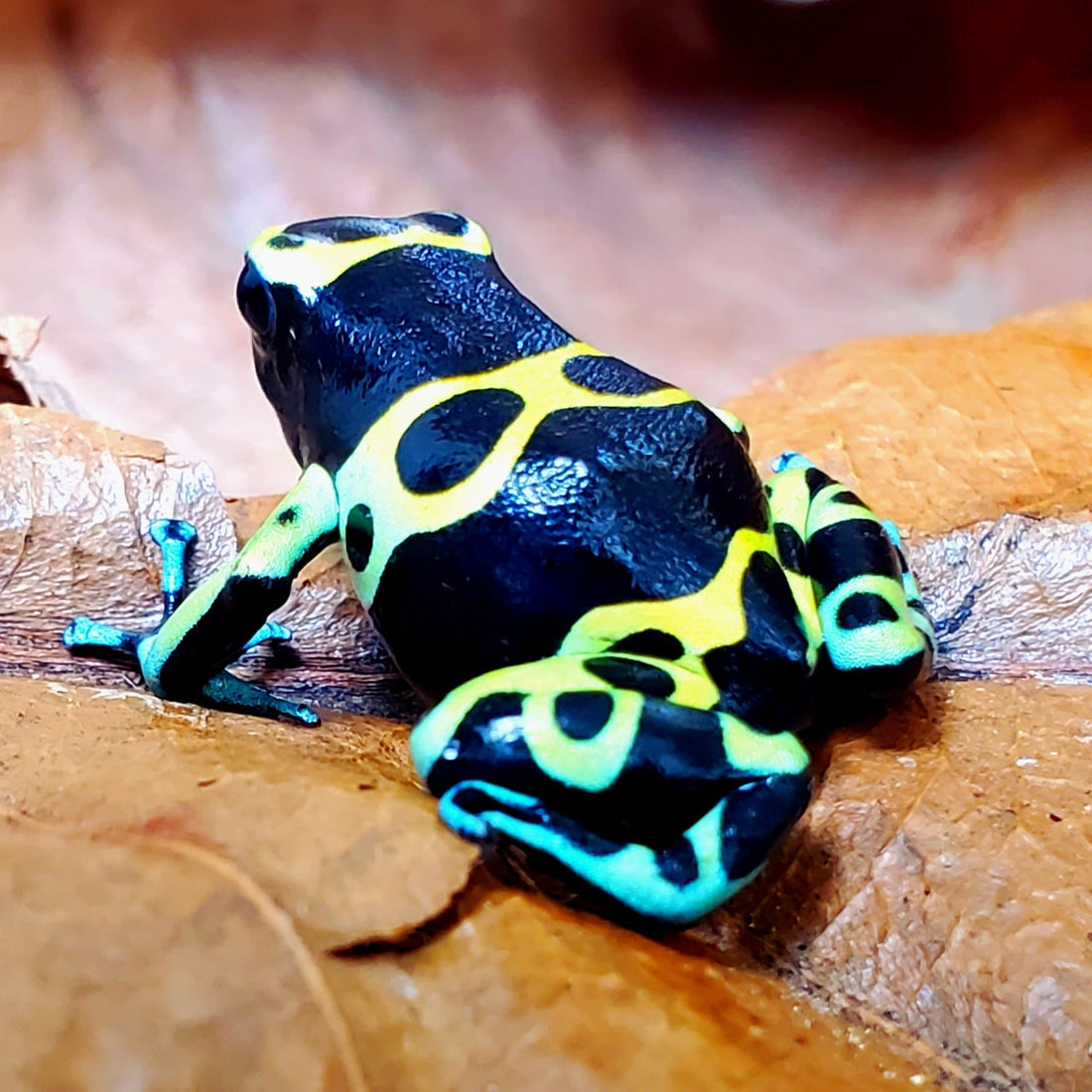
Reproduction of Dendrobates
Valerio ChiaradonnaHow to Breed Dendrobates: A Complete Step-by-Step Guide
Breeding poison dart frogs is a fascinating experience for any tropical amphibian enthusiast. In this guide from Animal Instinct Rome , we explain how to create the ideal conditions for breeding your poison dart frogs, handle the eggs, and properly raise the tadpoles.
Preparing the Terrarium for Dendrobates Breeding
To encourage the reproduction of dendrobates , it is essential to set up a tropical terrarium that respects some parameters:
-
Temperature : 24-27°C during the day, 20-22°C at night.
-
Humidity : 80-100%, maintained with regular misting.
-
Lighting : 12 hours a day.
-
Vegetation : Dense foliage, bromeliads and moss.
-
Nesting surfaces : Large leaves, split coconuts, or ceramic plates.
A well-organized terrarium will stimulate natural courtship and egg-laying behaviors.
How to Choose a Pair of Dendrobates
To successfully start the reproduction of dendrobates , a pair consisting of a male and a female is needed:
-
Male : Smaller, slightly enlarged front toes.
-
Female : Larger, rounder body.
💬 At Animal Instinct Roma we can help you identify the sex of your dendrobates!
Courtship: How Reproduction Begins
Under optimal conditions, the male will begin courting the female by emitting low-frequency songs.
A ritual dance will follow, culminating in the laying of eggs on moist, protected surfaces.
Dendrobates Egg Laying and Management
Females lay 3 to 10 eggs per clutch.
What to do :
-
Gently transfer the eggs into a moistened tray with osmosis water enriched with catappa.
-
Maintain high humidity by covering the container.
-
Check daily for mold or rot.
Hatching and Care of Dendrobates Tadpoles
After about 10-14 days the tadpoles hatch .
How to proceed:
-
Move each tadpole to an individual tank or mini-aquarium.
-
Use osmotic water, possibly with catappa leaves to improve the quality.
-
Feed the tadpoles spirulina powder, crushed flakes, or tadpole-specific food.
📌 Tip : Stable water temperature and quality are essential for proper development!
Growth and Metamorphosis: From Tadpole to Frog
During growth:
-
Perform regular water changes (2-3 times a week).
-
When the hind legs emerge, lower the water level and add exit ramps.
The complete cycle from tadpole to frog takes about 60-90 days .
Care of Young Dendrobates
After the metamorphosis:
-
Place the little ones in a special, humid and protected terrarium .
-
It feeds on microcolembola and, later, on Drosophila melanogaster (fruit flies).
At Animal Instinct Roma you can also find live colonies of nutritious insects for the weaning phase!
Mistakes to Avoid When Breeding Dendrobates
-
Do not force cohabitation if the specimens appear aggressive.
-
Avoid dry environments or unstable temperatures.
-
Never completely submerge eggs or tadpoles.
Reproducing dendrobates requires attention to detail, but can provide unique emotions.
With patience, dedication and the right precautions you can witness the wonderful life cycle of these extraordinary amphibians.
If you're looking for materials, accessories, or simply want to talk to experts, we're waiting for you at our Animal Instinct Roma store.
We're here to help you every step of the way, from choosing a mate to caring for your tadpoles!
