
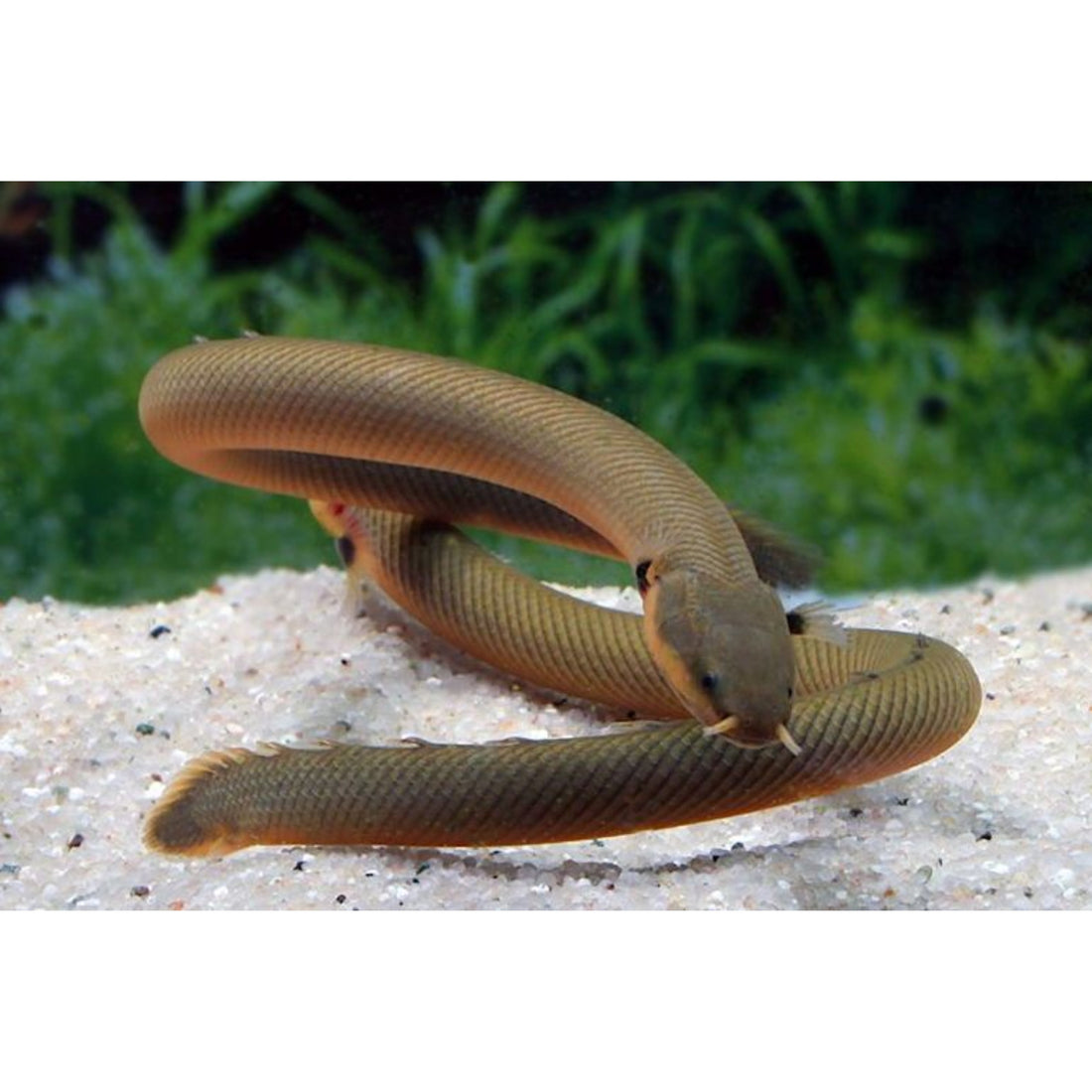
Everything you need to know about Erpetoichthys calabaricus, the African ropefish
Valerio ChiaradonnaIf you've never heard of Erpetoichthys calabaricus, you're probably not alone! Commonly known as the "rope fish" or "floss eel," this strange African freshwater fish is one of the most fascinating and mysterious aquarium inhabitants. In this article, you'll discover everything you need to know about this unique species, from its physical characteristics to its aquarium life, to understand why it's so popular with aquarium enthusiasts.
What is Erpetoichthys calabaricus?
Erpetoichthys calabaricus is a fish native to the freshwaters of West Africa, particularly in areas near rivers and lakes with abundant vegetation. Its scientific name may seem complicated, but behind it lies a creature resembling a small eel with a thin, elongated, and highly flexible body. It is nicknamed "rope fish" due to its filamentous shape and the way it moves through the water.
Appearance and physical characteristics
This fish can reach lengths of 30-35 centimeters in an aquarium, although larger specimens, up to nearly a meter, have been observed in the wild. Its body is covered with shaded green scales with patterns resembling a lattice. What makes it unique are the numerous dorsal fins, small and separated from each other, which resemble many small veils along its back. Thanks to its extremely flexible body, it moves with sinuous movements, almost like a snake.
Natural habitat and ideal conditions
Erpetoichthys calabaricus prefers calm, slow-moving waters rich in vegetation and abundant organic matter, such as decaying roots and leaves, on the bottom. The ideal temperature for this fish is between 26 and 30 degrees Celsius, with a slightly acidic or neutral pH of 6 to 7.5. These conditions best recreate its natural environment, making the fish healthier and more active.
Behavior and eating habits
The ropefish is primarily a nocturnal predator. During the day, it tends to hide among plants and move little, while at night it comes into play, hunting small invertebrates and smaller fish. In an aquarium, it's important to feed it fresh or frozen food, as it rejects dry foods such as flakes or granules. It's a solitary fish, preferring to live without many other fish nearby, especially those of similar or smaller size, to avoid conflict.
How to breed Erpetoichthys calabaricus in the aquarium
If you want to keep this fish at home, there are some basic precautions to follow. First of all, you need a large enough aquarium, at least 200 liters, with plenty of plants, roots, and hiding places to simulate its natural habitat. The water must be clean and kept stable, with regular water changes to prevent harmful substances from accumulating. Temperature and pH must be monitored to always remain within the ideal range.
Another crucial aspect is the choice of tankmates: it's best to choose peaceful fish of a larger or significantly different size to avoid aggression or prey. Finally, its diet requires care and attention, offering live or frozen foods such as worms, small crustaceans, and aquatic insects.
Reproduction and longevity
Reproduction of Erpetoichthys calabaricus in an aquarium is not easy and is rare. It lays eggs on vegetation but does not care for its young. The larvae are unusual in that they have external gills, a trait more reminiscent of amphibians than fish. As for lifespan, this species can live up to 20 years, a sign of its good resilience when properly cared for.
Why choose Erpetoichthys calabaricus?
This fish is an excellent choice for those looking for something different from the usual tropical aquarium fish. With its unique appearance and interesting behavior, it's a fascinating and spectacular sight. However, it's only recommended for those with some experience, due to its specific breeding and feeding requirements.
In conclusion, the Erpetoichthys calabaricus is a fish with a rich history and unusual appearance, capable of captivating anyone eager to discover new forms of aquatic life. Properly cared for, it becomes a true living jewel for any aquarium and a piece of African nature to admire in your own home.
If you enjoyed this article, explore our other content to learn more about the wonderful world of aquariums!